
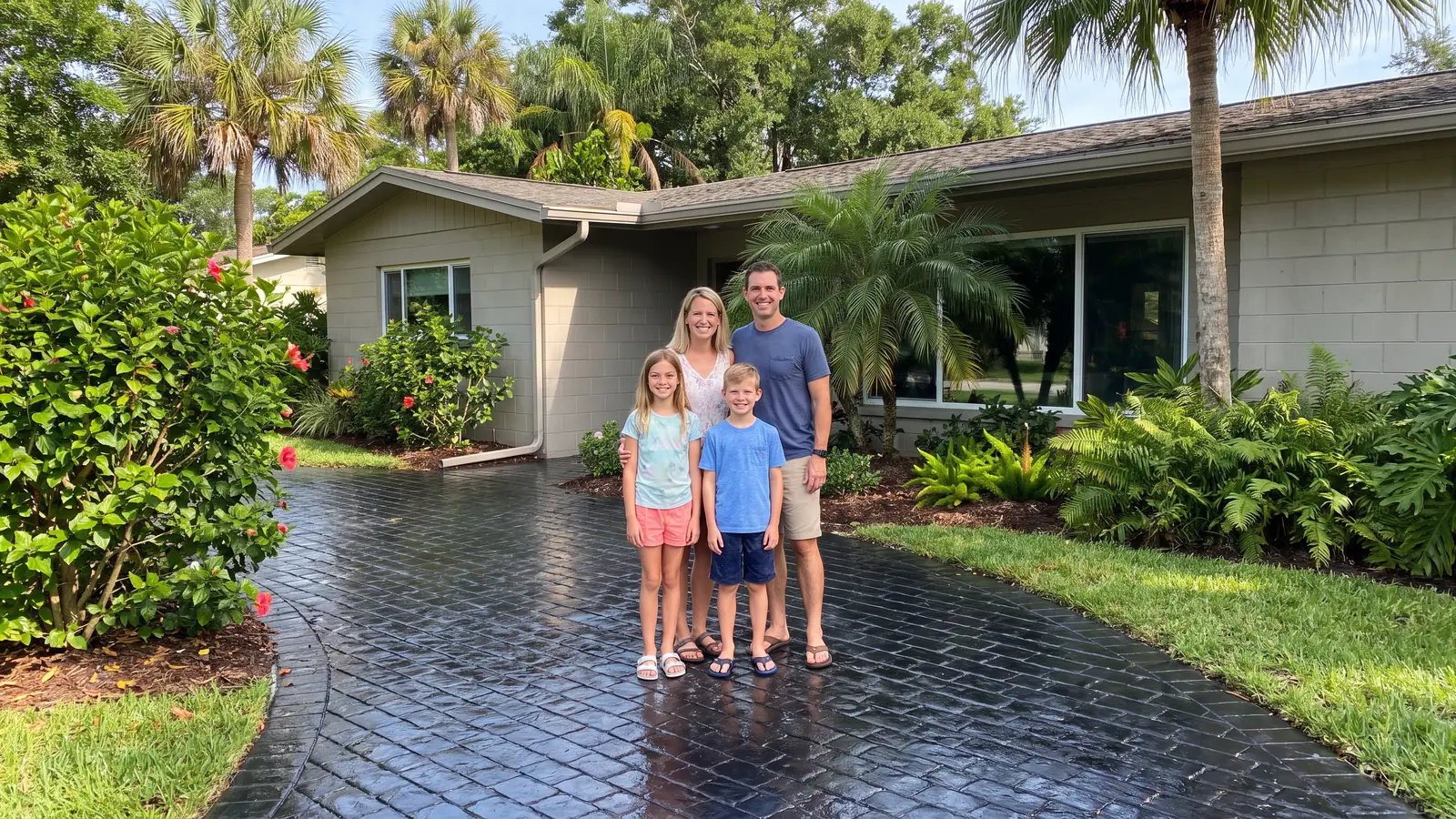
Paver sealing for Oceanway homes
Paver Sealing in Oceanway, FL
Oceanway pavers take daily sun and summer storms, and a local contractor can seal them, so call (904) 901-6561.
- Brings out deeper paver color
- Fresh joint sand helps lock pavers in place
- Gives weeds less room to grow
- Makes the surface easier to keep clean
- Free estimate, no obligation
Request a Free Estimate
Free, no obligation.
Fast, careful paver sealing in Oceanway
Paver sealing is available across Oceanway, from Oceanway Manor, which dates to 1958, to the streets built in the decades of growth since. Expect a local contractor to wash, re-sand and seal your driveway, front walk, patio or pool deck, after a free estimate. Ready to start? send a quick request and expect a reply within 1 business day, usually much sooner.
Much of Oceanway has been built since the early 1980s, so many pavers here are newer. Newer does not mean spotless, though, since gray film, thin joints and fading show up early in Florida sun. Call (904) 901-6561 and tell the contractor how old your pavers are and what you notice. You are under no obligation after the estimate.
Why hire a local paver sealing contractor in Oceanway?
Oceanway grew from farmland into neighborhoods, so its pavers range from brand new to a few decades old. A local contractor can tell which stage yours is in, so send a quick request.
A free look at new pavers
Brand new or years old, your Oceanway pavers get a free look, and you hear whether to seal now or wait.
A range for comparison
The published range is $1.75 to $3.25 per square foot to clean, sand and seal. Check any Oceanway quote against it. A written quote shows the rate used.
A finish that fits
Matte keeps the stone's natural look. Wet look is glossier, though it shows scuffs sooner. Ask to see the sealer name in writing.
You hold the pen
You choose the finish and the date, and the quote binds you to nothing.
Get Your Free Estimate in Oceanway
Tell us about your pavers in Oceanway.
Free, no obligation
What paver problems show up most in Oceanway?
A sea breeze that brings daily storms
A Jacksonville weather blog says a nearly daily sea breeze drives the wet season, when June through September brings more than half of the year's rain in Northeast Florida. Short afternoon storms hit joints hard, and each one can wash a little sand out. After a few seasons the joints thin and the edges shift. That is normal wear, not a flaw in the install, and it is a good time to wash, sand and seal.
Fine sand underneath
Per the USDA, the Mandarin soil series is deep fine sand on marine terraces with a water table 18 to 42 inches down. Sand moves with water, so the base under a driveway can shift too. A dip near a downspout or a gutter run is a common first sign, and sealing keeps new sand from leaving. A low paver still has to be reset first, so point out any dip or ponding on the apron at the first visit.
White haze on young pavers
Oceanway has grown since the early 1980s, and First Coast High School added a wing in 2006 for that growth, so lots of pavers here are young. A paver maker says efflorescence, a white mineral haze, may not wash away with rain, and it has to clear before sealer goes on. Its guidance for new pavers is a wait of two to three months, while a St. Augustine company says 60 to 90 days. Sealing over a haze would show through the finish. A white haze looks like a stain but is a natural mineral deposit, and it does not hurt the paver.
Green film where it stays damp
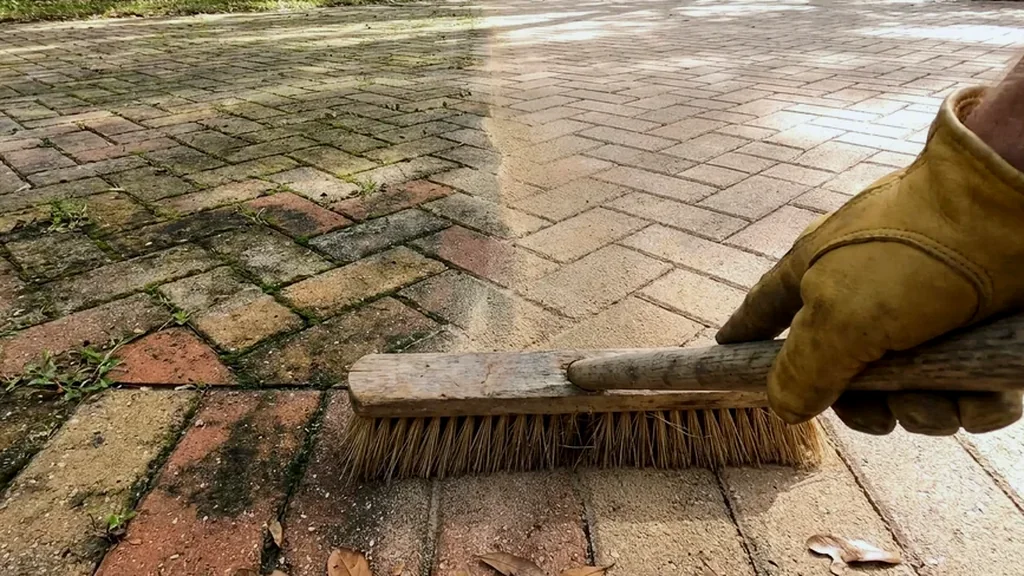
Per a paving trade article, moss and algae show up mostly where deep shade keeps pavers wet. In Oceanway that is often the side of the house away from the afternoon sun, or the edge of a screened pool deck. The film is growth, not dirt, and sealer cannot cover it. It must be cleaned off first, and it tends to return to the same spots, so mention them at the visit. Screened pool enclosures shade the edges, and the leaf litter that collects there stays wet.
Faded color in the full sun
Jacksonville's summer highs average around 92 degrees, and new subdivisions often have young trees with little shade. A paver driveway there takes full sun from morning to night. Color fades over a few seasons, and a chalky surface means the coat is wearing out. A fresh coat helps bring the color back, and tinted joint sand can freshen the look in the meantime. A driveway that faces south or west takes the hardest light of the afternoon.
Which parts of Oceanway have newer pavers and which have older ones?
Older ground sits around Oceanway Manor, which dates to 1958. Its single-family homes were built from 1948 to 1999 and run from 1,121 to 2,103 square feet. Listings there have included Moby Dick Drive, Shamrock Avenue and Collen Road. When you send a quick request, name your street so the contractor can place it.
Growth since the early 1980s filled in much of the rest, and River City Marketplace opened in 2006 on 125 acres east of Interstate 95. Owners occupy about nine in ten homes in the ZIP, which makes you likely the one deciding. Streets from that growth period are likely to have younger pavers than Oceanway Manor does. Call (904) 901-6561 to describe your street.
Newer subdivisions often have an HOA. Its power over your pavers is limited to what its declaration or published guidelines state, and Florida law says it must treat owners the same. Check whether yours mentions sealer or paver finish. Then send a quick request with the look you want.
What does paver sealing cost in Oceanway?
Price lists around Northeast Florida put cleaning, sanding and sealing at $1.75 to $3.25 per square foot. In Oceanway, size is often the biggest factor, since driveways and pool decks here can be generous. Stains, shade growth and old sealer move the number inside the range. For a figure on the pavers you have, send a quick request.
New pavers can change the plan, not just the price. If a white haze is still surfacing, the contractor may suggest a wash now and the sealer later, which means two visits. Screened pool areas and tight side yards add prep time as well. Describe both on a call to (904) 901-6561.
| Paved area | Typical example | Clean, sand and seal |
|---|---|---|
| 300 sq ft | Small patio or walkway | $525 to $975 |
| 600 sq ft | Two car driveway | $1,050 to $1,950 |
| 1,000 sq ft | Large driveway or pool deck | $1,750 to $3,250 |
| 1,500 sq ft | Driveway plus pool deck | $2,625 to $4,875 |
Math based on the $1.75 to $3.25 per square foot that Northeast Florida paver companies publish. Your contractor sets the actual price after seeing the surface. Repairs, leveling and stripping failed sealer are usually extra.
How does a paver sealing job work in Oceanway?
Check how old the pavers are
The contractor asks when the pavers were laid and whether anyone sealed them. Young pavers may still show efflorescence, which has to clear before sealer goes on. Older pavers are tested to see what coat is already there. You get a plan and a price at the same visit, and nothing is booked until you agree. Any sunken spots found are repaired first. If your pavers are brand new, this stage may be a wash only, with sealing set for a later visit. Photos of any hazy or stained areas help the contractor plan.
Wash the surface
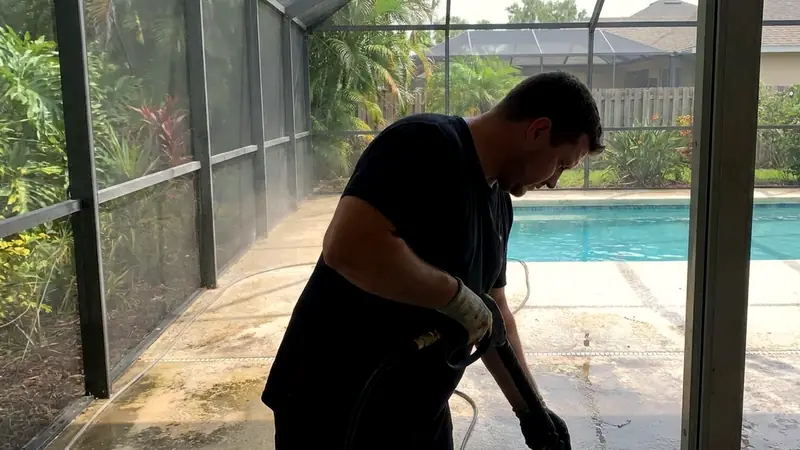
Washing takes off algae, dirt and tire marks. Oil, rust and green film are pre-treated. Pressure is kept modest because hard spray down into the joints can strip sand and leave the surface uneven. Any stain that will not fully lift is pointed out before the job, not after. Rinse water is kept off the planting beds and away from any screen enclosure where possible. Pool deck edges and screen frames are rinsed gently so water does not push dirt into the enclosure.
Sweep fresh sand into the joints
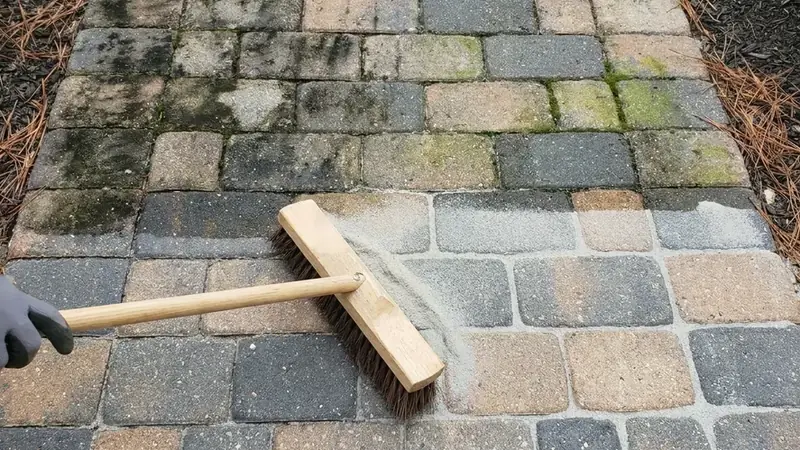
New sand follows the wash and gets swept in until the joints are full. On fine sand like the ground here, empty joints give soil and weeds a foothold. Tight joints keep the stones locked in place. Colored sand is an option if you want the joints to blend with the stones. Full joints also keep ants from digging in along the edges. On a young paver, the joint sand may only need topping up rather than a full refill.
Let it dry
Sealer put on damp pavers can turn white or cloudy. One Jacksonville company says pavers should be fully dry, usually 24 to 48 hours after cleaning. Shaded sides of the house dry slower than the sunny side. The contractor checks by hand rather than guessing, since wet pavers are the main reason sealer turns cloudy. Do not walk on the surface or move furniture back until the contractor says it is safe. Contractors tend to start early in summer, before the afternoon storms build.
Spray, back-roll and wait
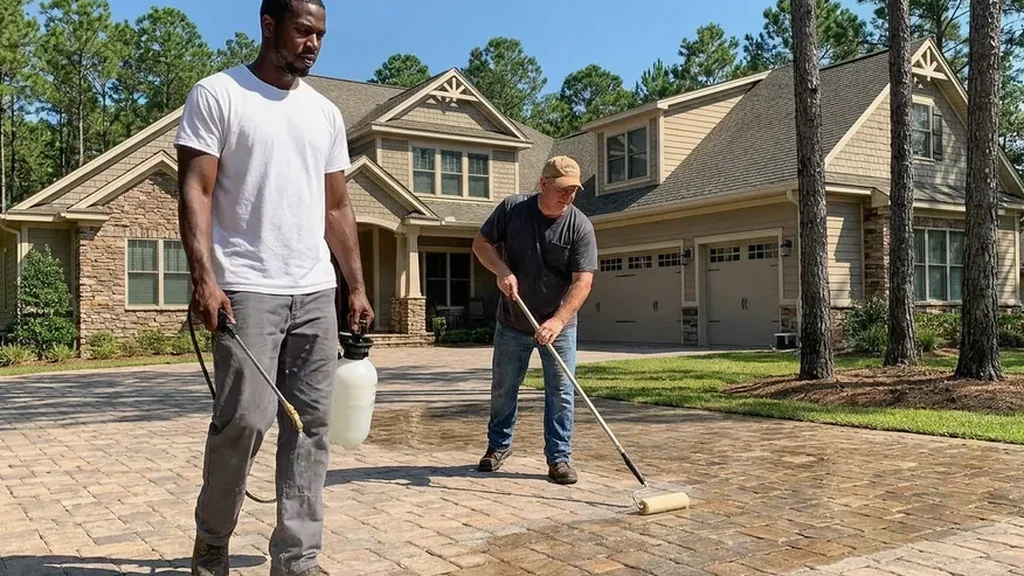
Sealer goes on in an even sprayed coat, and a roller then works it into the joints. A few hours later, foot traffic is typically fine. Keep cars off for about a day, and keep the sprinklers away until the coat cures. Jot the product name on a card in the garage for the next coat. Most driveways are finished in a single day. A short note with the date and the product name helps when the next coat comes due.
Complete paver services in Oceanway
A job here starts with a wash and ends with sealer. In between, fresh sand goes into the joints and the surface dries, which can take a day or more in shade. On newer pavers, the contractor may recommend waiting if a white haze is still coming up. Call (904) 901-6561 to hear whether your pavers are ready.
Oceanway surfaces include wide driveways, front walks, screened pool decks and back patios. Every surface gets measured, and the combined area can earn a lower rate. Pool decks tend to get a sealer that will not turn slick underfoot. Name your surfaces when you send a quick request.
The sealer comes in two bases, water or solvent, and in matte or wet-look sheens. A new paver with no sealer is a clean slate, so either type works. Older pavers may already carry a coat that limits the choice, because water-based sealer cannot go over solvent-based sealer. Call (904) 901-6561 and the contractor can explain what suits yours.
Storm season sets the timing. A Jacksonville company says pavers should be fully dry, usually 24 to 48 hours after cleaning, before any sealer goes on. With rain heaviest from June to September, spring and autumn dates are often easier. To pick a day, send a quick request.
Questions to ask before you hire
- Will the finished surface feel slick when it rains?
- Is refilling the joint sand after the wash part of the price?
- Who decides when the surface has rested long enough after the wash for sealing to begin?
- Can I leave a key or gate code, or must I be there at the start?
- Is a weed killer used in the seams, and is it safe for my dog?
- Do you wash the whole area the same way, or scrub the stained spots by hand?
- Where does the sealer go if it drips onto my shrubs or into the pool?
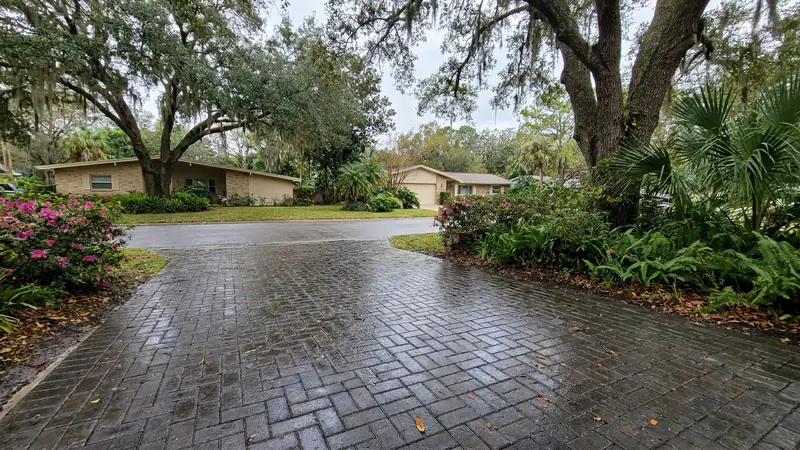
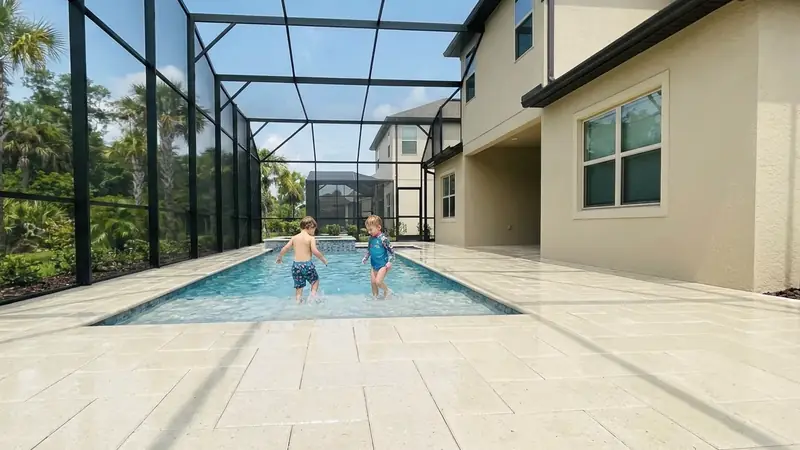
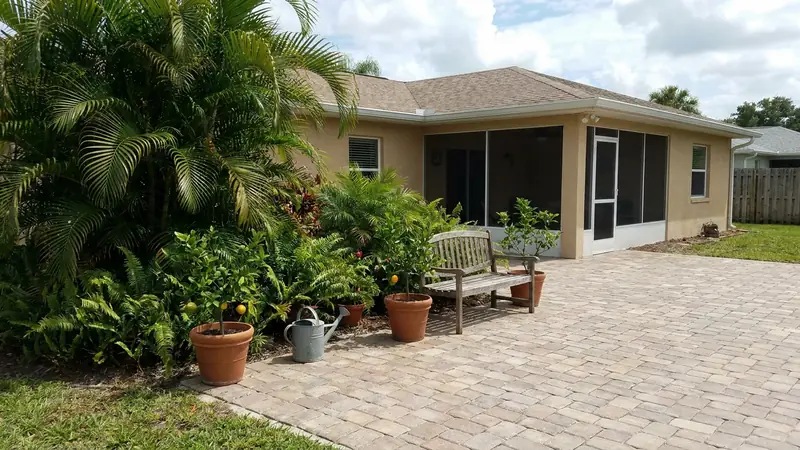
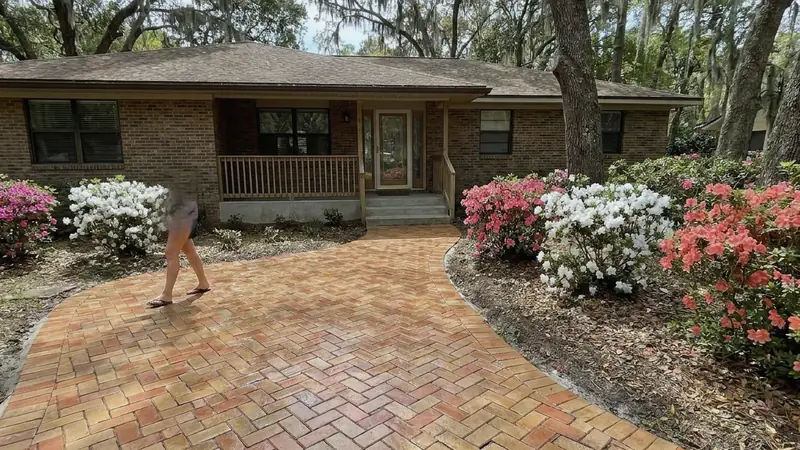
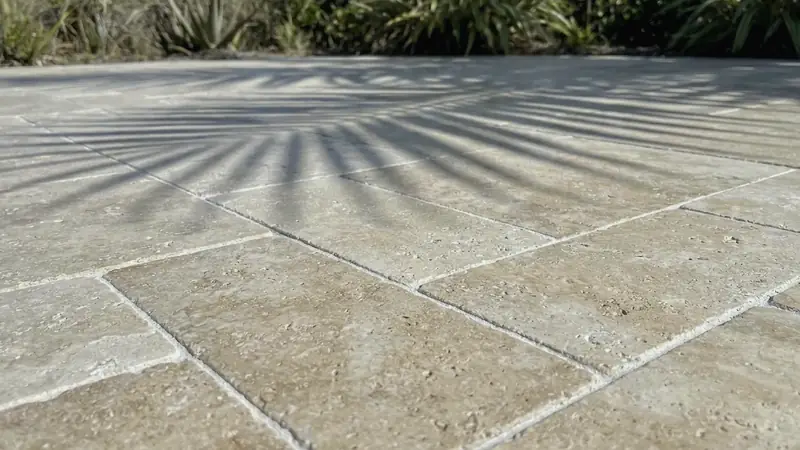
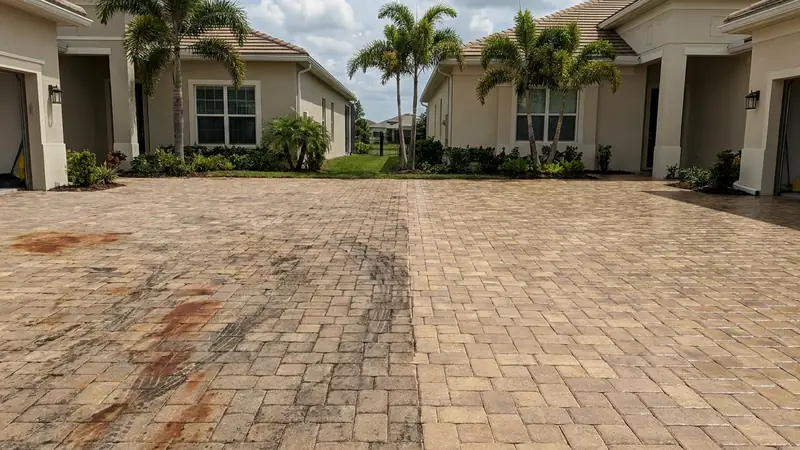
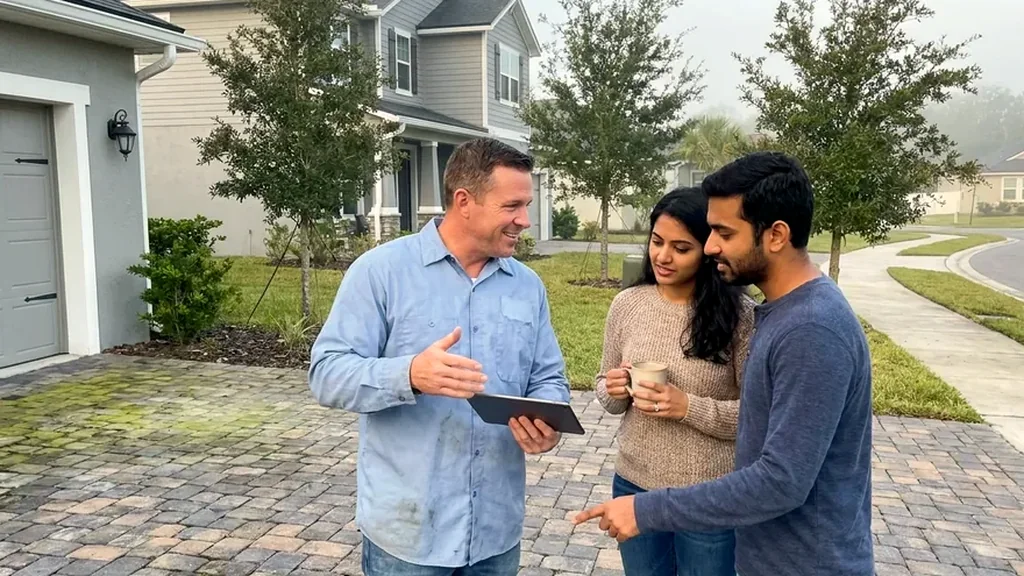
What do sealed pavers look like around Oceanway?
Why local matters in Oceanway
A contractor who works Oceanway knows how fast the area has changed since the 1980s. A single street can hold pavers from different decades. That affects what is on them and when to seal. Call (904) 901-6561 and expect the age to be the first thing asked.
The area also has its own weather pattern. A nearly daily sea breeze drives the wet season from June to September, and the ground under a driveway is fine sand. A local contractor plans around both, so ask how a rained-out day is handled. You can send a quick request to start that talk.
Oceanway also sits close to big wetland preserves, and the Timucuan Preserve alone covers 46,000 acres in northeast Duval County. Any lot with tall trees or a damp side yard can grow algae, since a paving article says it forms where shade keeps pavers wet. Local crews plan the washing for that growth. If your pavers stay damp, send a quick request and mention which side of the house is shaded.
What makes Oceanway different from the rest of Jacksonville?
It was once dotted with small farms and isolated houses. Growth since the early 1980s added neighborhoods, schools and shopping, including First Coast High School in 1990 around a paved courtyard. River City Marketplace followed in 2006 as the only outdoor mall north of the St. Johns River. If you live near any of them, call (904) 901-6561 and ask for a visit.
Past the houses, the land turns to marsh and history. Yellow Bluff Fort Historic State Park holds a fortified Confederate camp from early 1862 and has no entrance fee. Pumpkin Hill Creek Preserve State Park lies west of Big and Little Talbot Islands and also has no entrance charge. When you are ready for a quote, send a quick request and name your nearest landmark.
Frequently Asked Questions
What is the average cost to seal pavers in Oceanway?
Prices published by companies in this region run $1.75 to $3.25 per square foot to clean, sand and seal. Where an Oceanway job lands depends on its size, stains and old sealer. Make sure the quote spells out the measured area and the rate. A second quote is a fair idea.
What would it cost to seal pavers outdoors in Oceanway?
That works out to $1.75 to $3.25 per square foot, which covers the washing, fresh joint sand and sealer. A large driveway plus a pool deck adds up fast at any rate. Small jobs can cost more per foot, since setup work stays the same, while bigger jobs often get a better rate. Ask for the area on the quote.
Is there a downside to sealing pavers in Oceanway?
The main downsides are upkeep and timing. Sealer wears down, so a new coat comes due on a two-to-five-year cycle, going by company quotes. A wet look shows scuffs sooner than matte, and sealer needs a dry surface. Ask what finish suits your pavers before you decide.
How soon can new pavers in Oceanway be sealed?
Usually not right away. Pavers fresh from the installer can show efflorescence, a white haze that has to clear first, and one paver maker suggests waiting two to three months. A St. Augustine company says 60 to 90 days. The contractor can look at your pavers and tell you which side of that range applies.
What are the downsides of sealing pavers near a pool in Oceanway?
Some sealers leave a film that can feel slick when wet. Many pool decks get a penetrating sealer, and one St. Augustine company adds a slip-resistant additive. Ask the contractor what the product feels like when it is wet. Patios in pool areas also tend to need extra cleaning time.
How soon can I walk or drive on sealed pavers in Oceanway?
You can walk on the surface again after a few hours. Cars should stay off for about a day, give or take, depending on the sealer and the weather. Sprinklers should be switched off near the pavers until the coat cures. A short wait keeps the finish from getting marked while it hardens.
Do Oceanway HOAs have rules about sealer?
Some do. Under Florida law, a homeowners association is limited to the rules in its declaration or published guidelines and must treat owners equally. Natural finishes seldom cause trouble, while a high gloss may need a closer read of your rules.
Can pavers be sealed after a rainy week in Oceanway?
Not until they are dry. A Jacksonville company says pavers should be fully dry, usually 24 to 48 hours after cleaning. A rainy week in summer can push a date back, so the contractor will watch the forecast. A few dry days in a row are usually the first good opening.
Nearby areas we serve
Ready for a Free Estimate in Oceanway?
Call (904) 901-6561 and tell us about your pavers.
Free, no obligation