
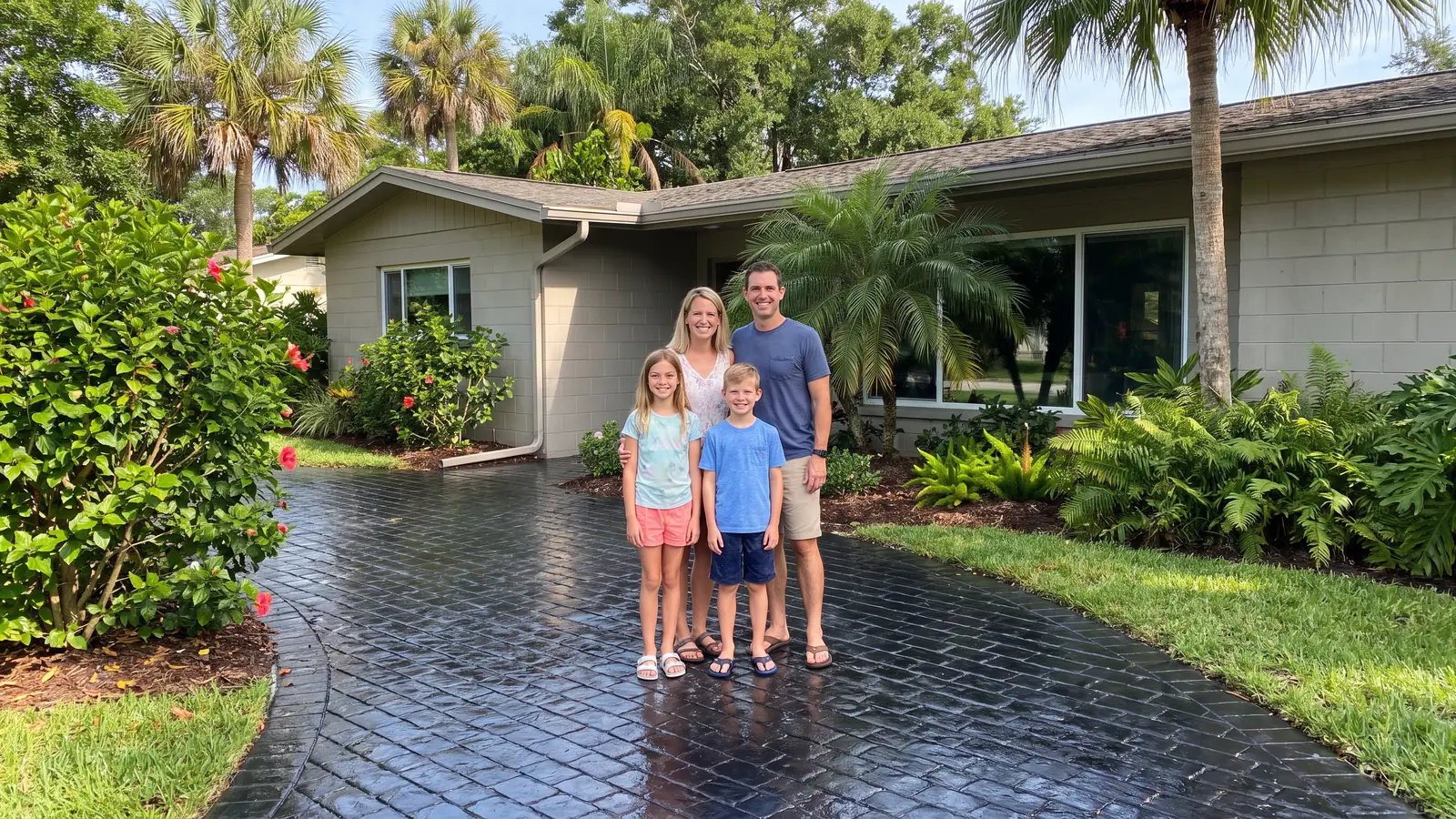
Paver sealing for Jacksonville Beach homes
Paver Sealing in Jacksonville Beach, FL
Pale pavers show every splash of Jacksonville Beach salt, so call (904) 901-6561 for a free cleaning and sealing estimate.
- Brings out deeper paver color
- Fresh joint sand helps lock pavers in place
- Gives weeds less room to grow
- Makes the surface easier to keep clean
- Free estimate, no obligation
Request a Free Estimate
Free, no obligation.
Fast, careful paver sealing in Jacksonville Beach
Paver sealing is available across Jacksonville Beach, from the blocks near the pier to the streets along the Intracoastal side. The work covers driveways, walkways and pool decks: a local contractor cleans, re-sands and seals them, and the estimate itself is free. Send your cross streets with send a quick request and a reply comes inside 1 business day, often much sooner.
Picture the driveway you pull into after a day on the sand: pale pavers gone dull, grit packed in the joints, a few green weeds along the edge. After a wash, fresh joint sand and a new coat, those same pavers read as one clean color again. If you would like to talk before anyone visits, call (904) 901-6561 and describe the driveway.
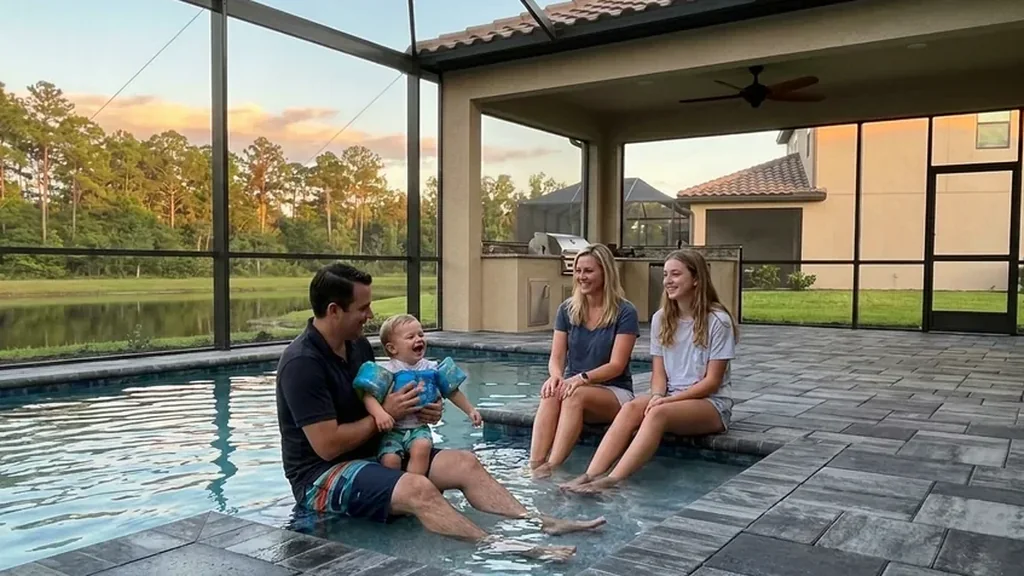
Why hire a local paver sealing contractor in Jacksonville Beach?
People in Jacksonville Beach pick a local paver contractor because salt, loose sand and a rainy August all work against a coat of sealer. To hear how that plays out on your block, send a quick request.
A free look at your driveway
The contractor looks over your Jacksonville Beach pavers at no charge. You hear a price before you agree to anything.
A price range to check against
Regional companies commonly publish $1.75 to $3.25 per square foot to clean, sand and seal. Use that as a yardstick for any bid.
A finish that suits the spot
One Jacksonville company suggests a low-sheen finish around pools to cut glare. Ask which finish suits your house.
You make the call
You pick the date, the finish and whether to go ahead. A Jacksonville Beach estimate carries no obligation.
Get Your Free Estimate in Jacksonville Beach
Tell us about your pavers in Jacksonville Beach.
Free, no obligation
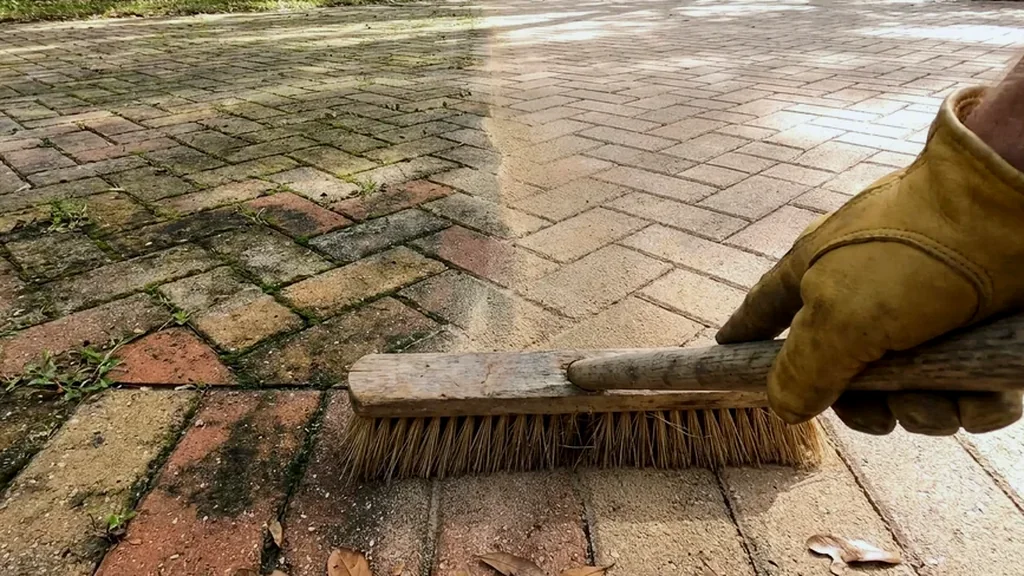
What paver problems show up most in Jacksonville Beach?
Pale pavers that show every splash
One paver maker explains that salt travels in the air as tiny particles and dries into crystals when moisture evaporates. The same source says light-colored pavers show splash marks, salt residue and grit sooner than dark ones. About two-thirds of Jacksonville Beach is water, so a light driveway here sits in that salt air all year. The maker recommends routine rinsing on the coast, which means light colors call for more attention. Ask the contractor which of your surfaces sit closest to splash.
Beach sand in the joints
Jacksonville Beach sits on San Pablo Island, a barrier island, and Jacksonville soil is mostly sand and clay. Hard rain can pull joint sand out. Lost sand lets joints widen and soil settle in, which gives weeds a place to start. Washing removes joint sand as well, so a contractor puts it back before any sealer goes on. Sand that is topped up after a wash stays put better than sand that was never refilled.
Pool decks that take double duty
Pool decks add chlorine or salt-system water to air that already carries salt. One Jacksonville paver company says those decks need new sealer about every 18 to 24 months. It also suggests a low-sheen finish to cut glare. One local company lists sealer with added grip as an option, so ask about texture near the water.
A rainy month that shortens the calendar
NOAA normals show August averaging 7.54 inches of rain over 14.3 rainy days, and July afternoons average a high near 89 degrees. Sealer needs a dry surface, so a sealing day has to fit between storms. November is the driest month at 2.50 inches, which makes it easier to schedule. Plan around the forecast rather than the calendar. A damp morning can also leave a film on pavers, so a patient start time protects the finish.
Coats laid down by earlier owners
Jacksonville Beach homes run from 1920s landmarks to early-1980s Ocean Terrace to mid-century modern designs, so a driveway may have had several owners. That means the old coat may be unknown. A water-based product will not bond to a solvent-based coat, so the contractor identifies what is on the surface before choosing. Flaking patches on a beach driveway often mean an earlier owner's coat is still down.
Is there any part of Jacksonville Beach that escapes the salt?
Salt on both sides of the strip
Almost none, because the city is a thin strip with the Atlantic on one side and the Intracoastal Waterway on the other. About two-thirds of its area is water, and the University of Florida says people within a couple of miles of salt water have likely seen salt spray damage on plants. Give your nearest cross street when you send a quick request. That lets the contractor plan the wash for your pavers.
How the blocks differ from Ocean Terrace to the Intracoastal
Housing differs from block to block. Ocean Terrace dates to the early 1980s and sits back from the sand near South Beach Park, while the Casa Marina Hotel, finished in 1925, shows the Mission style of the resort years. The city also has a notable stock of mid-century modern homes, so ask which finish suits yours and call (904) 901-6561.
Low ground and sunken spots
Because the ground is sandy and close to water on both sides, ask the contractor to check for sunken or low spots before any sealer goes on. A coat of sealer preserves a dip it covers, which means a puddle spot stays a puddle spot. Point those places out when you send a quick request. A quick look at the low end of the driveway helps.
What does paver sealing cost in Jacksonville Beach?
Where a beach quote should land
Jacksonville Beach pricing falls inside the range regional companies publish: $1.75 to $3.25 per square foot, which includes rinsing, new sand and sealer. Pool decks, aprons and walkways get measured in with the driveway, so your total follows your square footage. A deck with heavy salt film or a failed old coat takes more prep, which moves the number up. For a number tied to your own square footage, send a quick request and ask for the area of each surface.
How access and timing change the bill
Access and timing move the price too. A short driveway with room to park is quick work, while a back patio reached only through a side gate takes longer, since gear gets carried in by hand. Ask the contractor which of these apply to you when you call (904) 901-6561, and expect a reply within 1 business day.
| Paved area | Typical example | Clean, sand and seal |
|---|---|---|
| 300 sq ft | Small patio or walkway | $525 to $975 |
| 600 sq ft | Two car driveway | $1,050 to $1,950 |
| 1,000 sq ft | Large driveway or pool deck | $1,750 to $3,250 |
| 1,500 sq ft | Driveway plus pool deck | $2,625 to $4,875 |
Math based on the $1.75 to $3.25 per square foot that Northeast Florida paver companies publish. Your contractor sets the actual price after seeing the surface. Repairs, leveling and stripping failed sealer are usually extra.
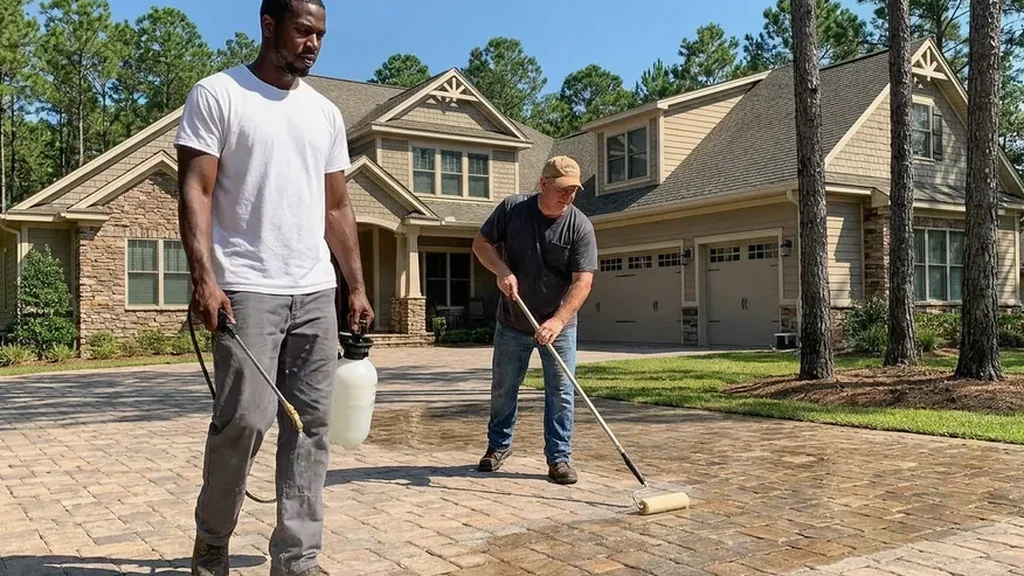
How does a paver sealing job work in Jacksonville Beach?
Size up the driveway and pool deck
The visit begins with a walk across every paved surface. The contractor looks for low joints, sunken corners and spots where water pools after rain. An older coat gets identified here, since one family of sealer will not bond over the other. Point out any sprinkler heads that soak the pavers, and ask for the sealer name in writing.
Rinse away the salt and grime
Salt haze, green growth and beach grit come off first. Pale pavers show every splash, so they can need a slower pass. Pool water and planting beds are kept clear of rinse runoff. Rust or oil from a car or patio furniture is treated in this step so it is not sealed in.
Top off the seams with sand
Washing flushes sand out of the joints, so new sand goes in before any sealer. A barrier island has sandy ground to begin with, and empty joints collect soil and weeds quickly. After filling, the surface is swept. The borders get a second pass, since sand leaves them first.
Let the pavers dry through
August brings about 14 rainy days to the beach, so the forecast drives the schedule. The contractor wants the pavers dry all the way through, and shaded edges or spots near sprinklers take longest. If a storm rolls in, the date moves. A day of delay costs less than a cloudy coat.
Roll on the finish you chose
Your pick goes on last: wet look for deeper color, matte for a quieter look, or a low-sheen coat around the pool. Scuffs show sooner on a wet look. Cars and patio furniture stay off until the contractor says the coat has cured, which varies by product. Ask for that time, and the product name, in writing.
Complete paver services in Jacksonville Beach
The wash, sand, dry and seal order
A Jacksonville Beach job runs in a set order: wash, re-sand, let the surface dry, then seal. The wash lifts salt film and sandy grime before anything gets locked under a coat. Fresh joint sand goes in next, so the joints are full when the sealer arrives. To ask how long each step takes at your address, call (904) 901-6561.
Driveways, walkways and pool areas
Driveways take tires and the splash from a wet street. Walkways beside the house can stay damp after storms. Pool decks get chlorine or salt-system water on top of the sea air, and one Jacksonville company says to reseal those about every 18 to 24 months. Tell the contractor which surfaces you have when you send a quick request.
Which sealer can go over an old coat
Sealer is water-based or solvent-based, and an old coat decides which one can go on. After that you choose the look. Matte keeps a mid-century home quiet, a wet look brings out color, and a low-sheen coat suits a pool deck. Ask what the contractor would pick when you send a quick request.
What the rainy months do to the calendar
Timing follows the weather. August averages 14.3 rainy days at the beach and July highs average about 89 degrees, so the drier months are easier to book. A sealing day also needs a surface that has fully dried after washing. For a date that fits your block, call (904) 901-6561.
Questions to ask before you hire
- Is refilling the joint sand after the wash part of the price?
- Is a weed killer used in the seams, and is it safe for my dog?
- How often do pavers like mine need a fresh coat in Jacksonville weather?
- If I only want the pool deck done, is that a smaller job with its own quote?
- Will the job slip a day if the pavers are still damp after a rainy week?
- Can the job be done in sections so I can still park a car?
- Does the sealing come with a written warranty, and who stands behind it?
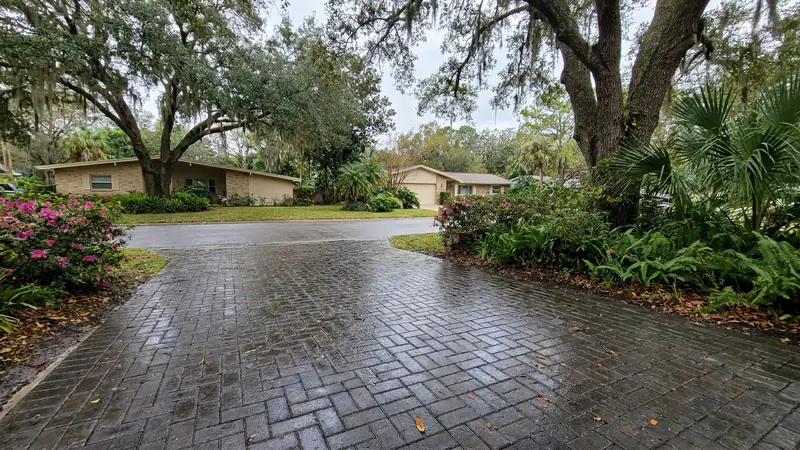
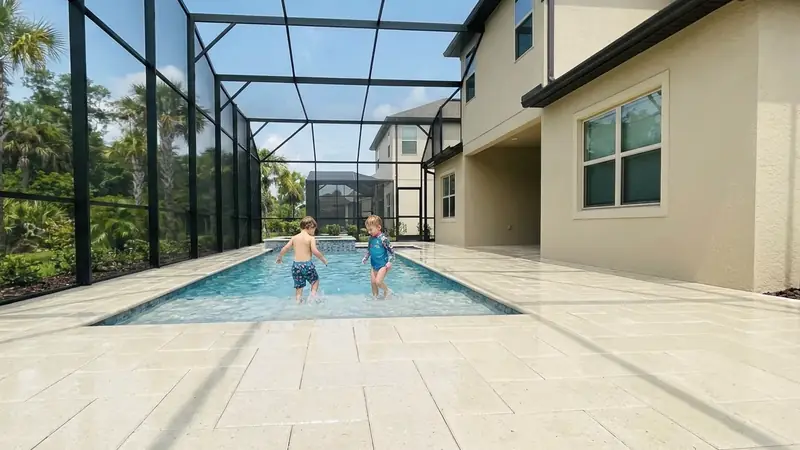
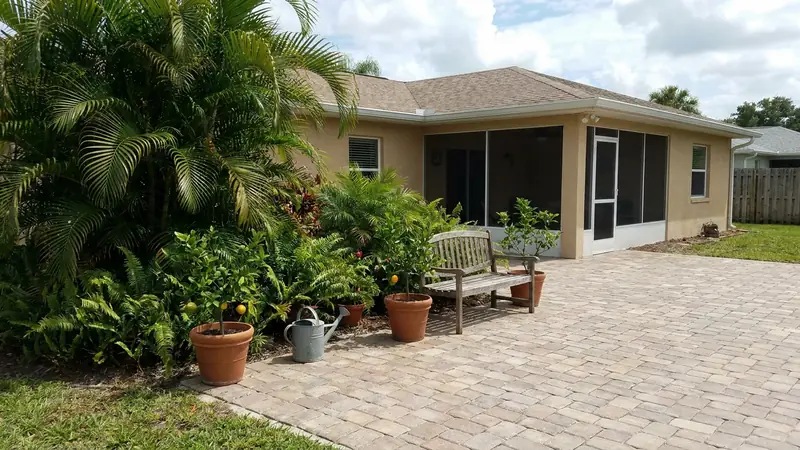
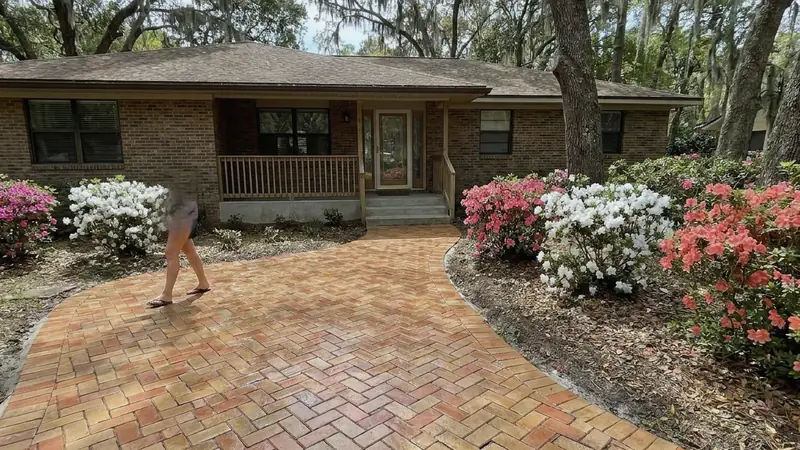
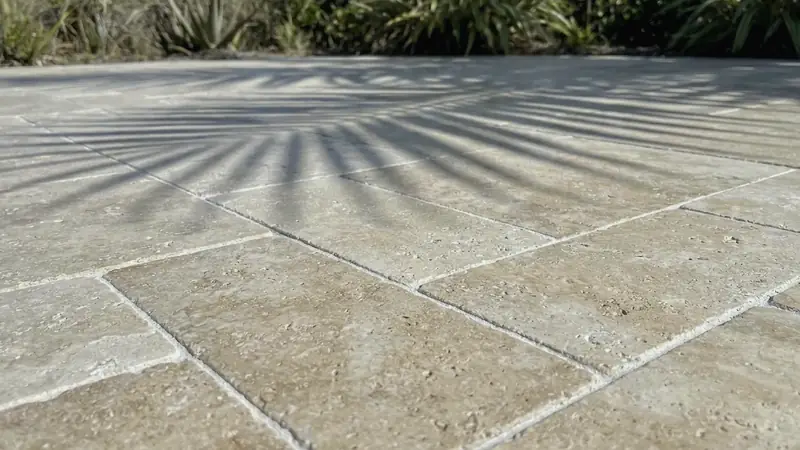
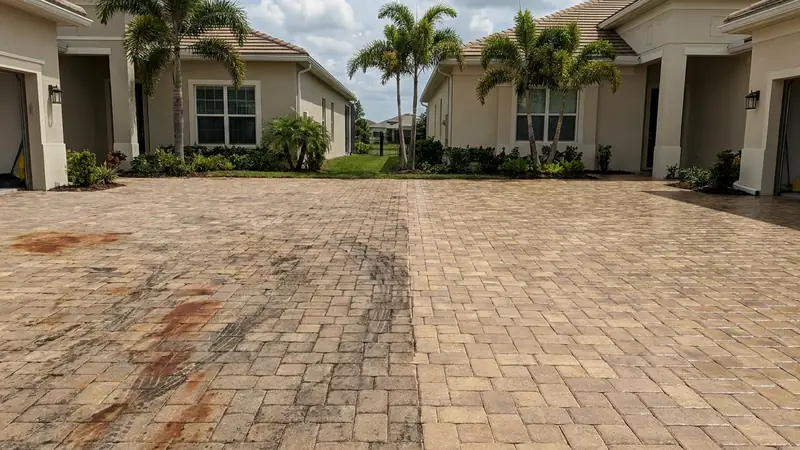
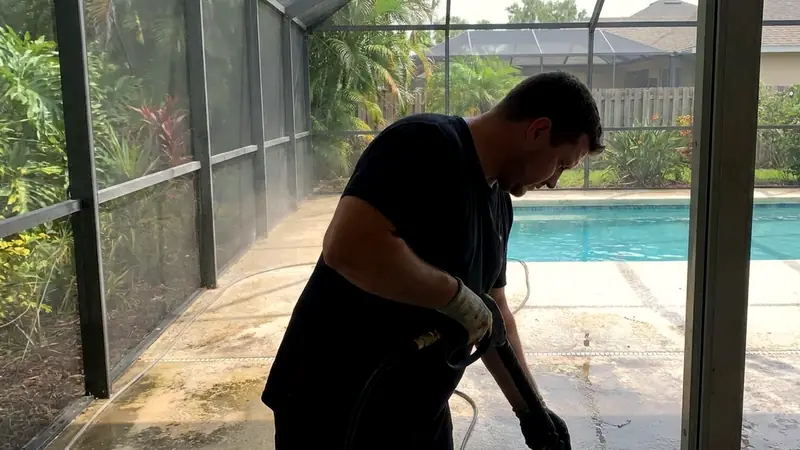
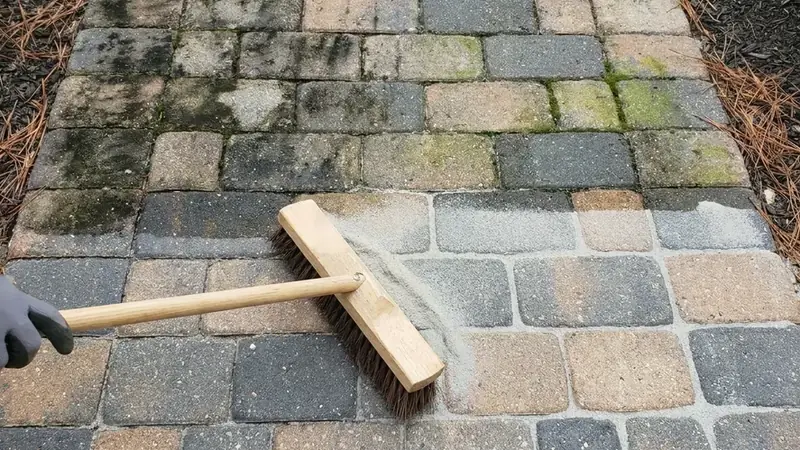
What do sealed pavers look like around Jacksonville Beach?
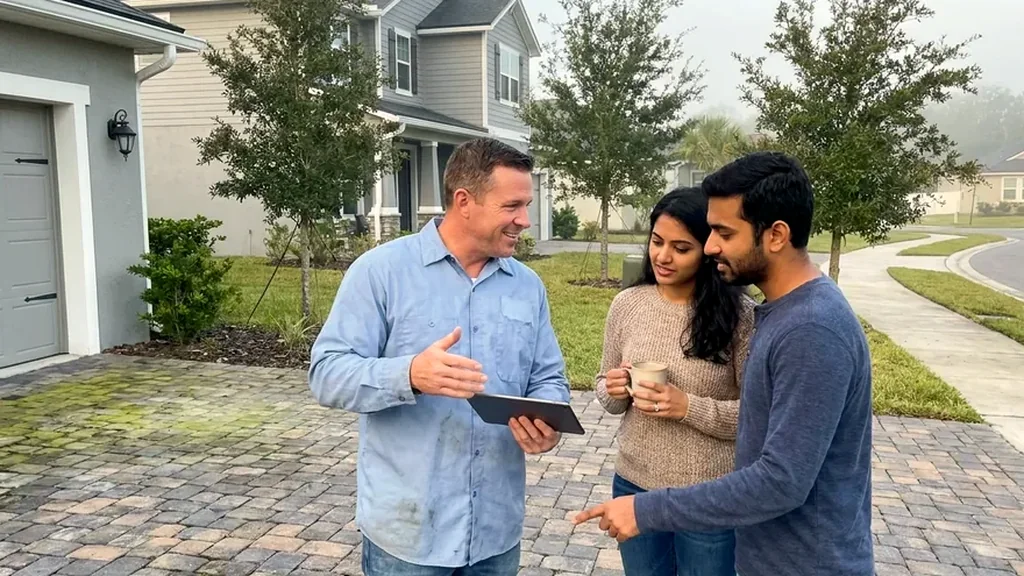
Why local matters in Jacksonville Beach
Salt does not stop at the dune
A contractor who works the beaches knows that salt does not stop at the dune line. Even blocks along the Intracoastal Waterway sit in a city that is two-thirds water, so the first thing a contractor wants to know is how your pavers have been rinsed over the years. Salt that was never rinsed off becomes part of the surface. To reach a contractor who works the Jacksonville Beach area, call (904) 901-6561.
Summer showers and wet pavers
Local habits matter as well. Summer showers can arrive fast, and sealer cannot go over wet pavers, so a local contractor plans for a backup day. Use send a quick request to ask how a job gets scheduled around the afternoon weather.
Mixed ages and surfaces on one street
A contractor who knows the area expects a mix of surfaces: Ocean Terrace driveways from the early 1980s, mid-century modern lots, and older blocks closer to the pier. Each may carry a different old coat. Describe your house and its age when you send a quick request, with no obligation to hire anyone. A contractor can sort that out in a few minutes on site.
Does Jacksonville Beach's history show up in a paver job?
From Ruby to Pablo Beach
Only a little, but it explains the town you live in. The settlement began as Ruby in 1884, became Pablo Beach in 1886 and took the Jacksonville Beach name in 1925. The Beaches Museum at 381 Beach Boulevard keeps the first post office, a 1911 train engine and an 1886 chapel, so name one of those landmarks when you send a quick request.
Flights on the sand
Pablo Beach has a flight story too: Lt. William DeVoe Coney landed on the sand in 1921, and Jimmy Doolittle took off from it in 1922. Driving on the beach ended in 1979, and Beach Boulevard follows an old railroad bed built over in the late 1940s. If you live close to any of these places, call (904) 901-6561 and give your street.
Frequently Asked Questions
What do homeowners pay per square foot to seal pavers in Jacksonville Beach?
Expect $1.75 to $3.25 per square foot for the full clean, sand and seal, a span regional companies commonly publish. Salt film, lost joint sand and an old coat decide where a Jacksonville Beach job lands. Have the quote show your total square footage, since that lets you compare bids line by line. Pool decks, aprons and side walks count toward that area, so measure them all.
Is it good to seal pavers in Florida, and does it help near the ocean?
Often, yes. Sealer coats the surface and holds the joint sand, and quotes of two to five years between coats are common. With the ocean and the Intracoastal both close by, expect the shorter end and ask the contractor what your driveway needs. Pale pavers show salt sooner, so a light driveway close to the water will tell you first.
How long do paver sealers last at the beach?
Two to five years is the usual quote, with beach conditions pointing toward the short end. One Jacksonville company puts pool decks with chlorine or salt systems at about 18 to 24 months. Pale pavers show wear and salt residue sooner, so check them first. Write down when your last coat went on so you know how many summers it has been through.
Is it better to spray or roll paver sealer?
Both, in sequence: one supplier's guide has the first coat sprayed and then back-rolled with a slit foam roller. Ask which method your estimate assumes. Asking for the method in the estimate also lets you compare bids side by side.
Can pavers be sealed during the rainy summer in Jacksonville Beach?
It depends on the day. Sealer needs a dry surface, and August averages 14.3 rainy days at the beach, so a contractor books around the forecast. Expect a date to move when storms pass through. November is the driest month at 2.50 inches, so fall and winter dates are simpler to schedule.
Will sealer make a Jacksonville Beach pool deck slippery?
It depends on the finish. A wet look is shinier than matte, so ask about a low-sheen coat or added grip around pools. One Jacksonville company suggests low sheen to cut glare, and another lists grip as an option. Texture is decided at the estimate, not after the work.
What happens first when a contractor seals pavers in Jacksonville Beach?
The first step is a walk-through to see where joints have dropped, where water sits and whether an old coat is down. That decides the cleaning plan and which sealer can go on. Then the pavers are washed and re-sanded before sealing. Point out anything you want fixed, such as a sunken corner by the garage.
Do I need to move cars and furniture for a Jacksonville Beach sealing job?
Yes, plan to clear cars, planters and furniture from the pavers. The contractor will tell you how long to stay off after sealing, because the time depends on the product. Ask for that window when you get your estimate. If your driveway is short, plan to park on the street for the day.
Why is paver sealing so expensive for a beach driveway?
A beach driveway costs more than a jug of sealer suggests. The hours go into rinsing off salt, refilling joints and letting everything dry, and an old coat adds prep. Weigh any bid against the published $1.75 to $3.25 per square foot.
Does the color of my pavers matter near the ocean in Jacksonville Beach?
It can. A paver maker says pale pavers show splash marks, salt residue and sand more quickly than darker ones. If yours are light, plan on rinsing them often and ask the contractor how often a coat should be checked. If you are choosing a new color, ask how it will hold up to salt.
Do I have to reseal pavers near the ocean in Jacksonville Beach more often?
Often, yes. Quotes run two to five years between coats, and salt air, sun and pool water push a beach driveway toward the short end. A Jacksonville company gives driveways near the coast about 18 to 24 months, so ask your contractor how to judge the coat you have.
Ready for a Free Estimate in Jacksonville Beach?
Call (904) 901-6561 and tell us about your pavers.
Free, no obligation